|
|
|
Future dates TBA Over the years I've had the good
fortune to travel in and enjoy the natural riches of many states in Mexico,
from the borderlands of Sonora and Chihuahua to the lowland rainforests of the
southeast. Though all those journeys have been memorable, I have never
experienced a landscape i We begin this unforgettable journey
in Tuxtla Gutierrez where we start our trip with a visit to Sumidero Canyon, a
deep and dramatic liquid incision through a limestone dome. While mostly
covered with tropical deciduous forest, there are a few patches of
near-evergreen forest, making for an interesting mix of birds and plants from
both western and eastern Mexico. At Sumidero we'll look for white-throated magpie jay, white-lored
gnatcatcher, Nutting's flycatcher, streak-backed oriole, banded
wren, russet-crowned motmot, blue-and-white mockingbird, barred antshrike,
northern bentbill, Couch's kingbird, Canivet's emerald, fan-tailed warbler, and some of the rarer species such as
belted flycatcher and slender sheartail. From Tuxtla, we head south to the
small town of
Jaltenango, our take-off point for El Triunfo. The magic begins as we
leave Jaltenango and travel along the Rio Jaltenango valley through forest that gradually becomes less
and less altered as we reach the biosphere boundary. Along the way, birds
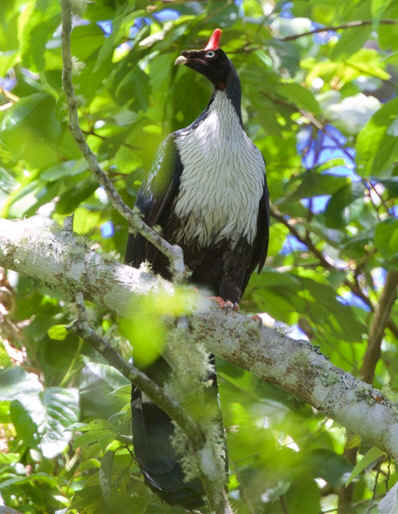
are plentiful and include white-winged tanager, orange-billed nightingale-thrush We'll spend three nights at El Triunfo where we'll be treated to the warm hospitality and great food of our Mexican hosts who seem to pull off miracle after miracle in coordinating our logistics in this remote and roadless area. From our camp, where yellow grosbeak, flame-colored tanager, gray silky-flycatcher, spotted nightingale-thrush, brown-backed solitaire are common, we'll explore several gorgeous trails looking for horned guans and resplendent quetzals as well as highland guan, mountain thrush, gray-breasted wood wren, rufous-browed wren, unicolored and black-throated jays, white-faced quail dove, ruddy-capped nightingale-thrush, violet sabrewing, wine-throated hummingbird, black-crested coquette, spotted and spot-crowned woodcreepers, ruddy foliage-gleaner, yellowish flycatcher, yellow-throated and chestnut-capped brush-finches, fulvous owl and many more. From the high camp, we'll make a
three-day descent to the Pacific lowlands, intimately enjoying the changing
habitats and the species variety they present. From the trail and from our
well chose Our trip concludes in Tapachula where we'll enjoy a great hotel with giant wren, Pacific screech owl, white-bellied chachalaca, yellow-winged cacique, cinnamon hummingbird, and Pacific and orange-chinned parakeets right on the grounds. We may also, as we have in the past, in late March and April, be treated to a "river of raptors" show over the hotel. Much of the cost of this trip goes to support FONCET - www.fondoeltriunfo.org - and the local communities who provide amazing logistical support and make the experience fun, rewarding, and surprisingly comfortable. It's a great opportunity to get a big bang for your conservation-based buck. The El Triunfo trip is a wilderness
adventure that is physically challenging. We'll spend 3 nights in hotels
and 6 nights in
the reserve (3 of these will be in the dorm with beds and a hot shower,
and 3 will be tent camping with a cold shower). Walks are mostly at a birding pace and
include distances that average about 2 (mostly level) miles while at the high
camp, 5-6
miles (downhill) between the three Pacific slope camps, and the 7.5-mile uphill
hike on the day we enter the reserve. Horses will carry our gear so
that we only need to carry daypacks in the field. The rewards for the
adventure, however, are memories of a lifetime.
Detailed itinerary and references available upon request. Photos:
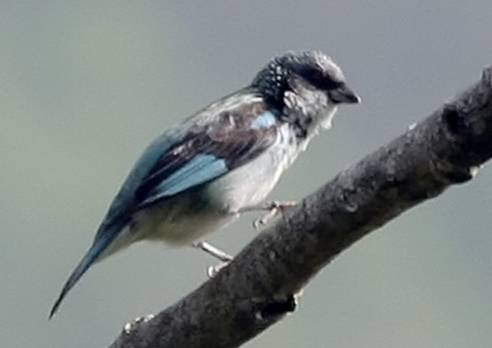
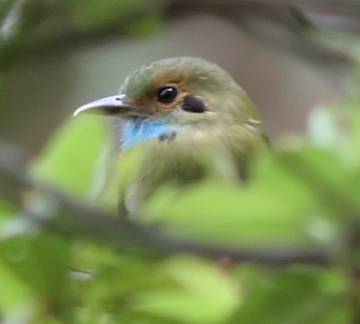
Cabanis' tanager, and blue-throated motmot by Misty Vaughn |
|
|





 n Mexico as wild and pristine as that of the El Triunfo
Biosphere Reserve in southern Chiapas. Perhaps the
most bird and wildlife rich area in the country, the El Triunfo region is
magical for many reasons, the most important, perhaps, being that people have
left it alone. With no roads, villages, livestock, or other habitat
altering
n Mexico as wild and pristine as that of the El Triunfo
Biosphere Reserve in southern Chiapas. Perhaps the
most bird and wildlife rich area in the country, the El Triunfo region is
magical for many reasons, the most important, perhaps, being that people have
left it alone. With no roads, villages, livestock, or other habitat
altering